Friday, June 12, 2015

Washington DC and George Washington's Mt Vernon Home


A warning to the reader that there will be some ranting and raving later in this blog post.

With the weather conditions severe here in the Washington DC area with temperatures reaching into triple digits and super high (100%) humidity, Mia and I decided to head over to George Washington's Mt Vernon early this morning to ensure we were in and out before the day go too hot.  We succeed with ease and returned to a cool trailer now that our air conditioning works.  It is going to get very, very hot this afternoon and I suspect that I will find my way to the land of naked skin down by the two pools that this park has.

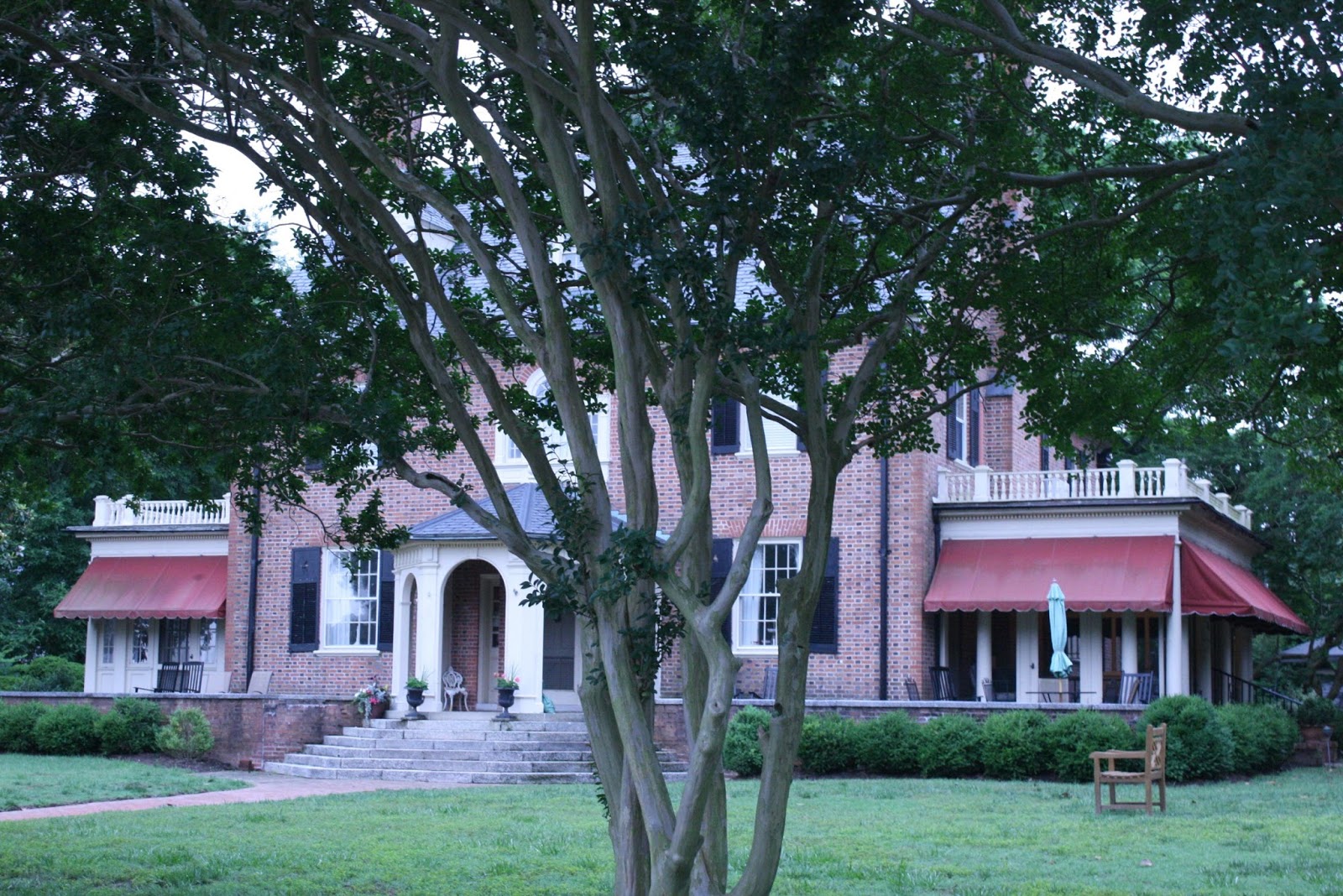
While Monticello is amazing for the architectural design, Mt Vernon is amazing for the simplicity of design.  Mt Vernon was home to George and Martha Washington from their wedding in 1759 to their deaths.  Monticello was sold a couple of times to those outside the Jefferson family but Mt Vernon has not been outside the family or foundation hands thus the property appears to be in much better condition.  The historical gardens are beautiful and the self guided tour of the house with no set time was great.  All of the grounds are kept in excellent condition.  There is a pioneer farm with folks working it in the correct garb for the era.  There are other trades being practiced as well.  The cemetery for their family was small but adequate.  The views from the back of the house across the Potomac are spectacular.  Pictures are only allowed outside the home.

The House and Kitchen
The Green House


Across the back lawn

Gardens

Gardens


Overseers cabin

Side of the home

On top the home

Corral

Wharf on the Potomac

More Gardens


Corn is knee high

George and Martha's resting place


Buildings alongside the barn

Sixteen side barn

Fence posts


On to my other issues.  On the way to Mt Vernon this morning it occurred to me that the road rules are apparently only made for me.  I travel at the speed limit and obey the rules of the road but it is obvious to me that in this part of the country the only person following the rules is me.  So it would appear that all the road signs and the regulations that go with them are intended for me and no one else.  The government apparently spends a lot of money to make sure Ken follows the rules.  I can't tell you how many times I have been given dirty looks by those who feel the need to run 15 to 30 miles per hour faster than the posted speed limit.  Or cut off by folks who feel it is okay to make a left hand turn in front of me from a right hand turn only lane.  All of this and there is an amazing amount of traffic.

I used to hate Los Angeles for the traffic that seems to always be around.  No matter what time of day or the day of the week there was traffic.  Three o'clock in the morning and there are traffic jams.  Well, Washington DC is not to be out done.  This area could have some of the worst driving conditions in the country.  Virginia and Maryland make it almost impossible for traffic on an entrance ramp to merge with freeway traffic at speed because they make you enter the freeway on curved entrance ramps with a very short distance to make a proper merge.  It is hard for just about everyone to get up to speed and merge with the traffic flow.

The people providing services here are not the nicest people in the world.  I don't want to include everyone in the statement but the vast majority of folks outside the parks and attractions we have visited have some really bad attitudes.  It seems to be a part of the overall environment here to be rude and condescending.  I  used to work with someone who grew up in Boston and he tried to tell me over and over again that the West coast mentality was the polar opposite of the East coast mentality.  I don't know if Woody reads the blog but I know folks who know him that do.  Please, someone let him know that I concede to his wisdom on the subject.  The two coasts have completely different outlooks on how to treat others.

While Virginia and Maryland are beautiful places to visit, I look forward to Monday when we can start home and leave the east coast in our rear view mirror.

Hope all is well and thanks for stopping by.  Sorry about the ranting.

Wednesday, June 10, 2015

Anxiety of Getting Service

Having worked in automotive dealerships for the majority of my adult life I have had the opportunity to see all of the good, the bad and the ugly.  I have worked for all of the above over the years ending my career with one of the really good guys at Chaplin's Automotive Group (Subaru, VW and Chevrolet) in Bellevue, Washington.  Since I retired I continued to visit their Chevrolet store for my service work.  As we left on our cross-country trip there was some anxiety with having to visit other dealers.

Thus far I have experienced nothing but good.  Today I went to Jim Price Chevrolet in Charlottesville for the service appointment I had made when we arrived in town on Monday.  Sandy Dyer had taken my appointment on Monday and was there bright and early to meet me at 7:15 am.  She wrote me up and showed me to the customer lounge.  Forty-five minutes later the tires were rotated, the oil changed and the inspection done.  I was pleasantly surprised to fine that no additional work was done and after wishing me safe travels I was sent on my way in under an hour.  She handled the entire transaction, there is no service cashier.  It is a great relief for someone traveling to have the excellent customer service experiences that I have had in my dealings with dealerships that I have literally picked off the Internet and Jim Price is certainly doing things right.


You can add Virginia to the list of states with everyone with a Virginia State license plate believing they are the exception to the rules when it comes to speeding, no matter where they are.  Just like Kentucky and Tennessee it would appear that revenuers are chasing them across the state.


Spending the rest of the afternoon getting the trailer ready to travel the easy 129 miles to College Park, Maryland for four fun filled days.

Hope all is well and thanks for stopping by.

Tuesday, June 9, 2015

Monticello

It is warm and muggy here in the hills around Monticello in central Virginia a few miles out of Charlottesville, so Mia and I made a point of being at the visitors center just before they opened at 8:30 am.  Since we had Honey with us we had to take different times for our tours of Thomas Jefferson's favorite place.  Once we had tickets, Mia took the shuttle to the top of the mountain and I took Honey and hiked up a trail to the cemetery and on up to the gardens and then the house.

Jefferson wanted to be remembered for three things:  The father of the Declaration of Independence, of the Statue of Virginia for Religious Freedom, and father of the University of Virginia.  He was a very highly educated individual who made it his life long pursuit to educate himself on everything from botany to architecture.  The place he went to learn, read and sometimes run the country was Monticello.  A beautiful 5,000 acre property in some of the most picturesque countryside in the nation.


Tomorrow I need to get up early and head in to Charlottesville to get the truck serviced for our trip home.  We leave here Thursday for College Park, Maryland where we hope to meet up with Mia's niece as well as our son and his family.  Oh, we need to insert a visit to George Washington's Mt. Vernon.

Hope all is well and thanks for dropping by.

Sunday, June 7, 2015

Off We Go

Tomorrow morning we will pull up stakes and leave the Historical Triangle and Anvil Campground to head northwest to Charlottesville KOA putting us closer to our next history lesson, Monticello.

This is a nice little family run operation with 77 sites, some configured a little weird.  It has been quiet except for the pretty active rail that runs from somewhere in the Appalachians to the waterfront in Virginia Beach where coal is piled high awaiting export.  The trains run several times a day and at least twice during the night and it is close enough that the south bound full train can get  you rocking and rolling.  I don't mind the trains but some do.  We have been here just over a week and everyone has been great.  The restrooms are clean and stock but for the number of sites a couple of more showers and stalls might be a good idea.  I would definitely come back here again.


The stay here has been very enlightening.  Trips to Yorktown, Williamsburg, Jamestowne, and Virginia Beach have left me with some answers to lifelong questions.  Imagine spending five months traveling to the new world to find thickly wooded land and very little else.  Having brought very few supplies work must begin immediately to provide food and shelter for survival.  These hearty individuals tried to carve out a life in the new land.  The troubles were many and riches were immense for those survived the first few years.  Far from the minds of these individuals was revolution against the very country that sent them on a commercial enterprise.

Years pass and things change.  The new colony continues to grow and prosper under overseers from a distant land until it becomes apparent that they being used by the very people who sent them.  The next few decades decide the fate of America with several individuals facing charges of treason as they sign the Declaration of Independence and start the American Revolution.  Untrained civilian militias fight trained British soldiers who are assisted by the Indians and Germans.  War comes between Britain and France and suddenly America gets a boost with the addition of French troops to help them in their cause.  Britain finds the war in America too costly considering the issues they are having with other colonies across the world and decides with the loss of Yorktown in 1781 to sign a peace treaty with the newly founded United States of America.

The struggles, pain, greed, hate, love, and everything else they dealt with is here in living history.  If you ever have the opportunity to come here and learn, do yourself a favor and spend time here.  In a week we have see much, but there is much more to see and understand.

Hope all is well and thanks for stopping by.

Saturday, June 6, 2015

Siege At Yorktown

In April 1775, the shot heard round the world was fired occurred at North Bridge in Concord, Massachusetts.  America was at war with their British rulers and the war would continue for six long, bloody years as the Continental Army formed from local militias took on the highly trained British soldiers.

George Washington managed to keep the troops together through the devastating winter of 1777-78 at Valley Forge as starvation and freezing cold led many to desert the cause.  Again in the winter of 1778-79 in Morristown Mr. Washington kept the army together as they suffered through another freezing winter with very little supplies or food.  America was young and sustaining an army was a major undertaking.  The following is taken from the National Park Service Website.

In the summer of 1780, the Americans received a major boost to their cause when 5,500 French troops, commanded by Comte de Rochambeau, arrived at Newport, Rhode Island. France had been sending supplies to the United States all along, but after France and England declared war against each other in 1778, French King Louis XVI sent troops and naval assistance to the United States to engage the enemy.
When Rochambeau’s forces arrived, the British were operating on two fronts. General Clinton, commander of British forces in North America, was occupying New York City after a largely unsuccessful attempt to control the northern and middle colonies. General Lord Cornwallis was leading through the southern colonies an army that had already captured Savannah and Charleston. The main American army under Washington was stationed along the Hudson River above New York City.
In the spring of 1781, Washington traveled to Rhode Island to meet with Comte de Rochambeau and plan an attack on Clinton. A French fleet was expected to arrive in New York later that summer, and Washington wanted to coordinate the attack with the fleet's arrival. As planned, Rochambeau's army marched in July and joined with Washington's troops outside New York City, only to learn that the French fleet was sailing to the lower Chesapeake Bay.
Washington changed his strategy to make Clinton think he was planning to attack him, while instead sneaking away to the south to trap Cornwallis. In order to fool Clinton, Washington had his men build big army camps and huge brick bread ovens visible from New York to give the appearance of preparations for a stay. Washington also prepared false papers under his signature discussing plans for an attack on Clinton, and let these papers fall into British hands. Leaving a small force behind, Washington and Rochambeau set out for Yorktown in mid-August. By early September they were parading before the Continental Congress in Philadelphia, and they arrived in Williamsburg, 13 miles west of Yorktown, in mid September.
Cornwallis was in Yorktown because he had been ordered by Clinton during the summer to provide a protected harbor for the British fleet in the lower Chesapeake Bay. Cornwallis chose Yorktown because of its deep-water harbor on the York River. His army spent the latter part of the summer fortifying Yorktown and Gloucester Point across the York River.
The French fleet, as part of the overall plan, entered the lower Chesapeake Bay in the end of August and disembarked 3,000 French troops to wait for Washington and Rochambeau in Williamsburg. On September 5, they encountered the British fleet in a naval engagement known as the Battle of the Capes. The British suffered damage to their ships and returned to New York, while the French, commanded by Admiral de Grasse, remained in the lower Chesapeake and established a blockade.
By the end of September, approximately 17,600 American and French soldiers were gathered in Williamsburg, while 8,300 British soldiers were occupying Yorktown.
The British forces included a small number of German auxiliary troops hired to help fight the war. Cornwallis recognized the odds were in the allies' favor, and he sent Clinton a note asking for help. Clinton responded that a British fleet with 5,000 men would sail for Yorktown from New York on October 5.
Cornwallis had his men construct a main line of defense around Yorktown that consisted of ten small enclosed forts (called redoubts), batteries with artillery and connecting trenches. The Americans and French marched from Williamsburg to Yorktown on September 28 and began digging a trench 800 yards from the British defense line to begin a siege. By October 9, the allies' trench was finished and their artillery had been moved up. Firing at the British continuously, they had virtually knocked the British guns out of action by October 11. Cornwallis had the additional misfortune to learn at that time that Clinton's departure from New York had been delayed.
During the night of October 11, the allies began a second trench 400 yards from the British. The next days were spent bringing up artillery and strengthening the new line. The new line could not be completed, however, without capturing British redoubts 9 and 10. On the night of October 14, 400 French stormed redoubt 9 and 400 Americans stormed redoubt 10, capturing them in less than 30 minutes. Nine Americans and 15 French died in this brief and heroic action.
On October 16, the British tried two desperation moves. Early that morning they attacked the allied center, attempted to silence a French Battery, but the French cannons were firing again in less than six hours. Late that night they tried to evacuate Yorktown by crossing the York River in small boats to Gloucester Point. A violent windstorm arose at midnight, however, scattering the boats and forcing an abandonment of the escape.
Realizing the situation was hopeless, Cornwallis sent forth a British drummer on October 17, followed by a British officer with a white flag and note indicating a request for a cease fire. A number of notes passed between Cornwallis and Washington that day as they set the framework for the surrender. The next day, October 18, four officers--one American, one French and two British--met at the Moore House, one mile outside Yorktown, to settle surrender terms.
On October 19, in a spectacle incredible to all who witnessed it, most of Cornwallis' army marched out of Yorktown between two lines of allied soldiers--Americans on one side and French on the other--that stretched for more than one mile. The British marched to a field where they laid down their arms, and returned to Yorktown. They did not know that on that very day, Clinton sailed for Yorktown from New York with 5,000 troops.
News of the British defeat at Yorktown spread quickly. Celebrations took place throughout the United States. London was shocked. The British prisoners were marched to prison camps in Winchester, Virginia and Frederick, Maryland. The American army returned to the Hudson River, while the French army remained in Yorktown and Williamsburg for the winter. Clinton and Cornwallis eventually returned to England where they engaged in a long and bitter public controversy over who was to blame for the British defeat at Yorktown.
Though the British still had 26,000 troops in North America after Yorktown, their resolve to win the war was nothing like it had been before Yorktown. The war had been lengthy and costly. Replacing Cornwallis' captured army was a questionable proposition, particularly because the British also were engaged in military struggles in India, Gibraltar, the West Indies and Ireland. Thus, the British Parliament in March 1782 passes a resolution saying the British should not continue the war against the United States. Later that year, commissioners of the United States and Great Britain signed provisional articles of peace. In September 1783, the final treaty was signed which ended the war and acknowledged American independence.
Yorktown today:
Sunrise over the York river north of Yorktown

The French Ship Hemione


Yorktown Waterfront

George Washington meets with French Admiral Francios DeGrasse

Yorktwon Home

Reenactment of U.S. Military encampment

Said to be the Medicine House

Cannon fire would have been deafening


Different flags fly here


Large statue of lady liberty


Battlefield


Battlefield

Battlefield


That is it for today, hope all is well and thanks for stopping by.

Friday, June 5, 2015

History Is Alive

Each time we go to Williamsburg we step back into time with living history.  Today our intent was to visit the Art Museums of Colonial Williamsburg home of folk art, china and pottery, silver work, woodworking, home building, instrument building, blacksmithing and the list goes on and on.  While we spent much of the time in the museum enjoying all of the above and more, we had the pleasure of attended another of the many nation builders speak of the times and the character.   Today we had the distinct opportunity of listening to one of the relative unknown founders who was very well known in the Williamsburg, Virginia area and was mentor to Thomas Jefferson, George Wythe.
These folks research their character and literally learn to live the part.  Listening to the comments made during this interaction with the current generation would lead one to believe that the nation may  well be heading down a road of imminent destruction.  Pretty scary stuff to think about especially coming from a character who literally help form the foundation that our country is built on.  He firmly believed in the power of the people and those who serve the people should be first, listening to their constituents, then their fellow public servants and finally, themselves.  No society  that has allowed partisanship to run rampant has survived.  He apparently didn't believe in political parties.

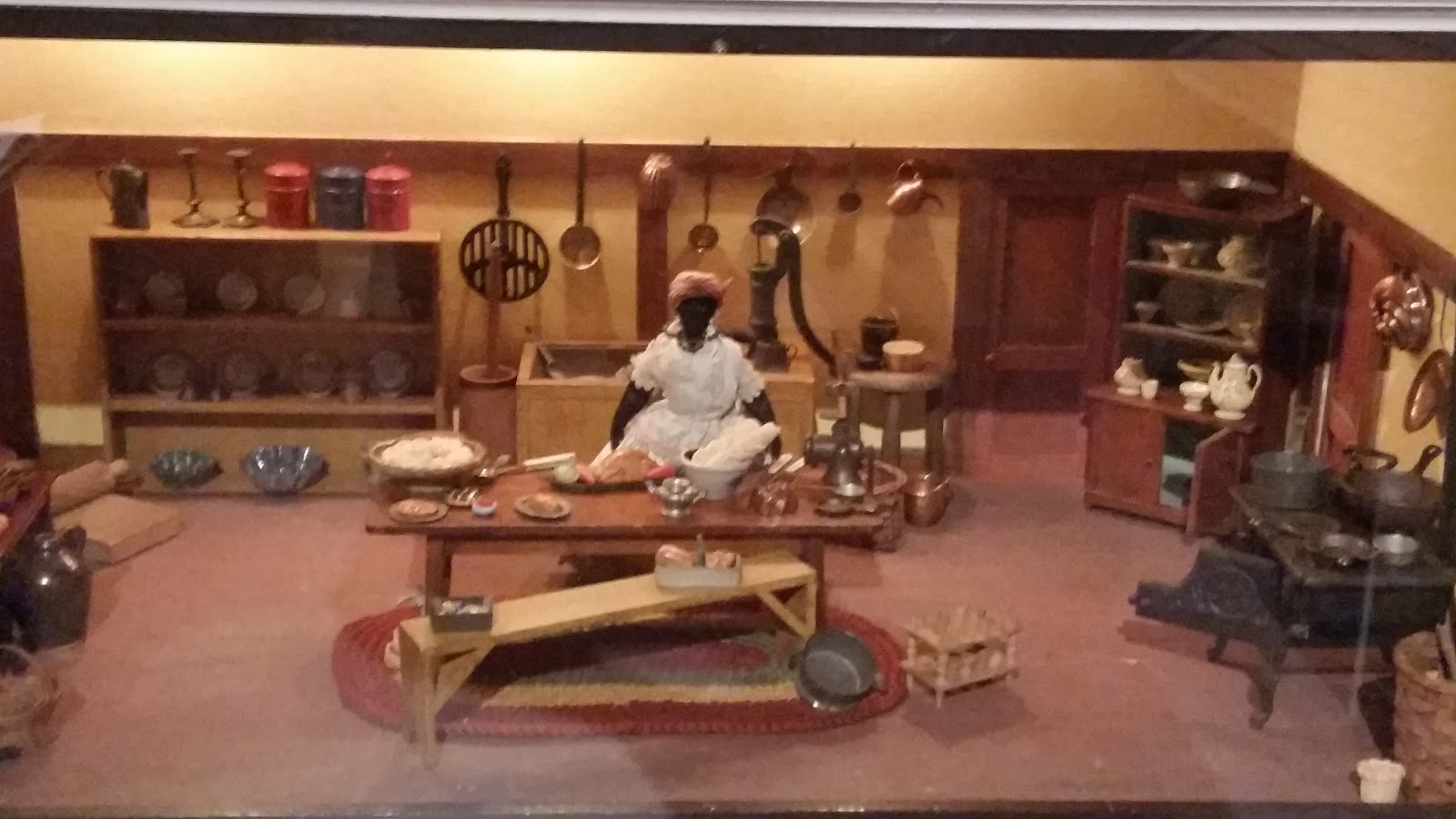
Some of the artifacts in the museum include the following.
Beautiful furniture

Every little girl dream

It looks real but...

Its part of a doll house

Burned on my birthday in 1854

Mental ill in Colonial days

Inlay done by hand

More beautiful inlay

That was our day.  Tomorrow I am going to try to return to Yorktown for some photos.

Hope all is well and thanks for stopping by.