Saturday, June 6, 2015

Siege At Yorktown

In April 1775, the shot heard round the world was fired occurred at North Bridge in Concord, Massachusetts.  America was at war with their British rulers and the war would continue for six long, bloody years as the Continental Army formed from local militias took on the highly trained British soldiers.

George Washington managed to keep the troops together through the devastating winter of 1777-78 at Valley Forge as starvation and freezing cold led many to desert the cause.  Again in the winter of 1778-79 in Morristown Mr. Washington kept the army together as they suffered through another freezing winter with very little supplies or food.  America was young and sustaining an army was a major undertaking.  The following is taken from the National Park Service Website.

In the summer of 1780, the Americans received a major boost to their cause when 5,500 French troops, commanded by Comte de Rochambeau, arrived at Newport, Rhode Island. France had been sending supplies to the United States all along, but after France and England declared war against each other in 1778, French King Louis XVI sent troops and naval assistance to the United States to engage the enemy.
When Rochambeau’s forces arrived, the British were operating on two fronts. General Clinton, commander of British forces in North America, was occupying New York City after a largely unsuccessful attempt to control the northern and middle colonies. General Lord Cornwallis was leading through the southern colonies an army that had already captured Savannah and Charleston. The main American army under Washington was stationed along the Hudson River above New York City.
In the spring of 1781, Washington traveled to Rhode Island to meet with Comte de Rochambeau and plan an attack on Clinton. A French fleet was expected to arrive in New York later that summer, and Washington wanted to coordinate the attack with the fleet's arrival. As planned, Rochambeau's army marched in July and joined with Washington's troops outside New York City, only to learn that the French fleet was sailing to the lower Chesapeake Bay.
Washington changed his strategy to make Clinton think he was planning to attack him, while instead sneaking away to the south to trap Cornwallis. In order to fool Clinton, Washington had his men build big army camps and huge brick bread ovens visible from New York to give the appearance of preparations for a stay. Washington also prepared false papers under his signature discussing plans for an attack on Clinton, and let these papers fall into British hands. Leaving a small force behind, Washington and Rochambeau set out for Yorktown in mid-August. By early September they were parading before the Continental Congress in Philadelphia, and they arrived in Williamsburg, 13 miles west of Yorktown, in mid September.
Cornwallis was in Yorktown because he had been ordered by Clinton during the summer to provide a protected harbor for the British fleet in the lower Chesapeake Bay. Cornwallis chose Yorktown because of its deep-water harbor on the York River. His army spent the latter part of the summer fortifying Yorktown and Gloucester Point across the York River.
The French fleet, as part of the overall plan, entered the lower Chesapeake Bay in the end of August and disembarked 3,000 French troops to wait for Washington and Rochambeau in Williamsburg. On September 5, they encountered the British fleet in a naval engagement known as the Battle of the Capes. The British suffered damage to their ships and returned to New York, while the French, commanded by Admiral de Grasse, remained in the lower Chesapeake and established a blockade.
By the end of September, approximately 17,600 American and French soldiers were gathered in Williamsburg, while 8,300 British soldiers were occupying Yorktown.
The British forces included a small number of German auxiliary troops hired to help fight the war. Cornwallis recognized the odds were in the allies' favor, and he sent Clinton a note asking for help. Clinton responded that a British fleet with 5,000 men would sail for Yorktown from New York on October 5.
Cornwallis had his men construct a main line of defense around Yorktown that consisted of ten small enclosed forts (called redoubts), batteries with artillery and connecting trenches. The Americans and French marched from Williamsburg to Yorktown on September 28 and began digging a trench 800 yards from the British defense line to begin a siege. By October 9, the allies' trench was finished and their artillery had been moved up. Firing at the British continuously, they had virtually knocked the British guns out of action by October 11. Cornwallis had the additional misfortune to learn at that time that Clinton's departure from New York had been delayed.
During the night of October 11, the allies began a second trench 400 yards from the British. The next days were spent bringing up artillery and strengthening the new line. The new line could not be completed, however, without capturing British redoubts 9 and 10. On the night of October 14, 400 French stormed redoubt 9 and 400 Americans stormed redoubt 10, capturing them in less than 30 minutes. Nine Americans and 15 French died in this brief and heroic action.
On October 16, the British tried two desperation moves. Early that morning they attacked the allied center, attempted to silence a French Battery, but the French cannons were firing again in less than six hours. Late that night they tried to evacuate Yorktown by crossing the York River in small boats to Gloucester Point. A violent windstorm arose at midnight, however, scattering the boats and forcing an abandonment of the escape.
Realizing the situation was hopeless, Cornwallis sent forth a British drummer on October 17, followed by a British officer with a white flag and note indicating a request for a cease fire. A number of notes passed between Cornwallis and Washington that day as they set the framework for the surrender. The next day, October 18, four officers--one American, one French and two British--met at the Moore House, one mile outside Yorktown, to settle surrender terms.
On October 19, in a spectacle incredible to all who witnessed it, most of Cornwallis' army marched out of Yorktown between two lines of allied soldiers--Americans on one side and French on the other--that stretched for more than one mile. The British marched to a field where they laid down their arms, and returned to Yorktown. They did not know that on that very day, Clinton sailed for Yorktown from New York with 5,000 troops.
News of the British defeat at Yorktown spread quickly. Celebrations took place throughout the United States. London was shocked. The British prisoners were marched to prison camps in Winchester, Virginia and Frederick, Maryland. The American army returned to the Hudson River, while the French army remained in Yorktown and Williamsburg for the winter. Clinton and Cornwallis eventually returned to England where they engaged in a long and bitter public controversy over who was to blame for the British defeat at Yorktown.
Though the British still had 26,000 troops in North America after Yorktown, their resolve to win the war was nothing like it had been before Yorktown. The war had been lengthy and costly. Replacing Cornwallis' captured army was a questionable proposition, particularly because the British also were engaged in military struggles in India, Gibraltar, the West Indies and Ireland. Thus, the British Parliament in March 1782 passes a resolution saying the British should not continue the war against the United States. Later that year, commissioners of the United States and Great Britain signed provisional articles of peace. In September 1783, the final treaty was signed which ended the war and acknowledged American independence.
Yorktown today:
Sunrise over the York river north of Yorktown

The French Ship Hemione


Yorktown Waterfront

George Washington meets with French Admiral Francios DeGrasse

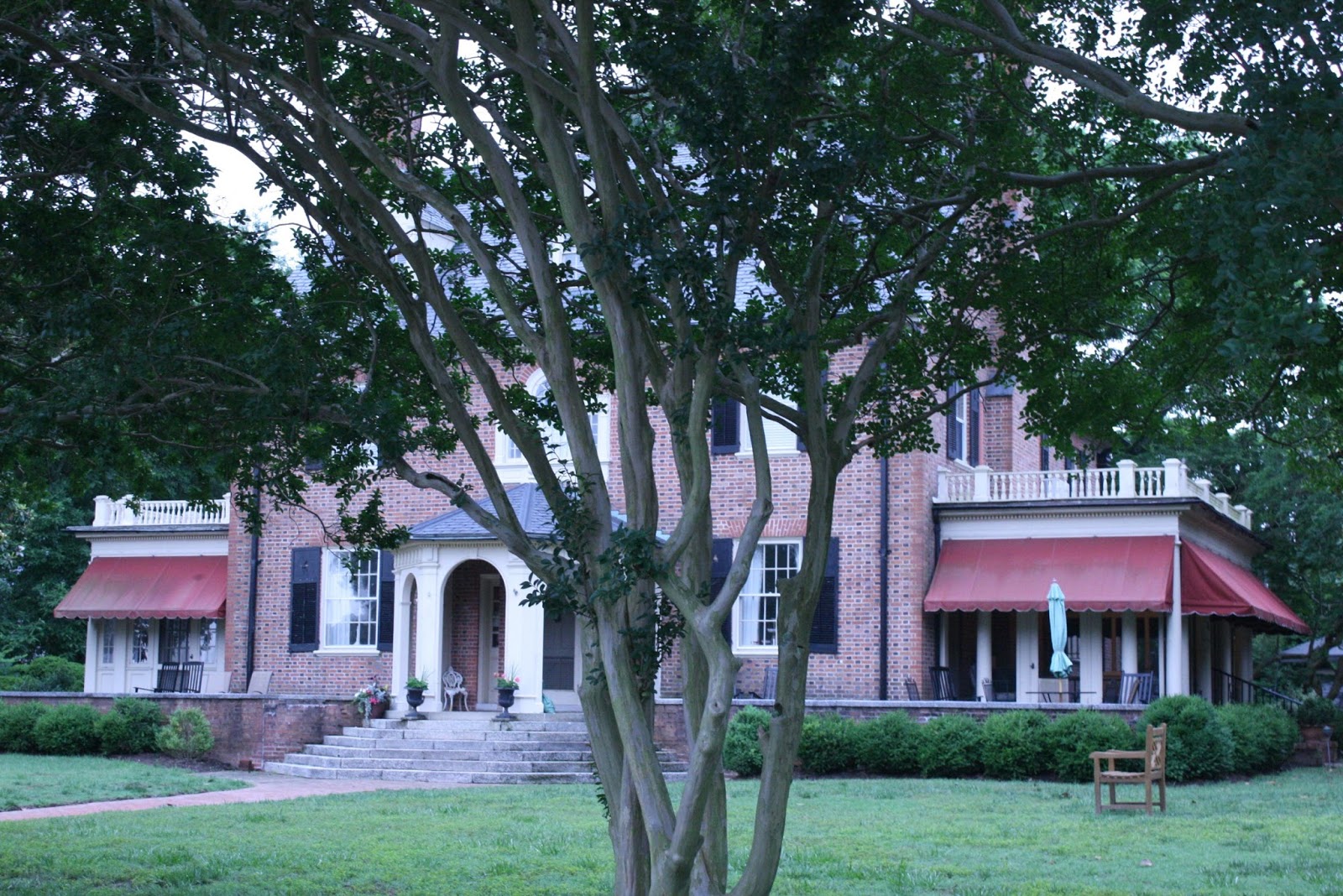
Yorktwon Home

Reenactment of U.S. Military encampment

Said to be the Medicine House

Cannon fire would have been deafening


Different flags fly here


Large statue of lady liberty


Battlefield


Battlefield

Battlefield


That is it for today, hope all is well and thanks for stopping by.

Friday, June 5, 2015

History Is Alive

Each time we go to Williamsburg we step back into time with living history.  Today our intent was to visit the Art Museums of Colonial Williamsburg home of folk art, china and pottery, silver work, woodworking, home building, instrument building, blacksmithing and the list goes on and on.  While we spent much of the time in the museum enjoying all of the above and more, we had the pleasure of attended another of the many nation builders speak of the times and the character.   Today we had the distinct opportunity of listening to one of the relative unknown founders who was very well known in the Williamsburg, Virginia area and was mentor to Thomas Jefferson, George Wythe.
These folks research their character and literally learn to live the part.  Listening to the comments made during this interaction with the current generation would lead one to believe that the nation may  well be heading down a road of imminent destruction.  Pretty scary stuff to think about especially coming from a character who literally help form the foundation that our country is built on.  He firmly believed in the power of the people and those who serve the people should be first, listening to their constituents, then their fellow public servants and finally, themselves.  No society  that has allowed partisanship to run rampant has survived.  He apparently didn't believe in political parties.

Some of the artifacts in the museum include the following.
Beautiful furniture

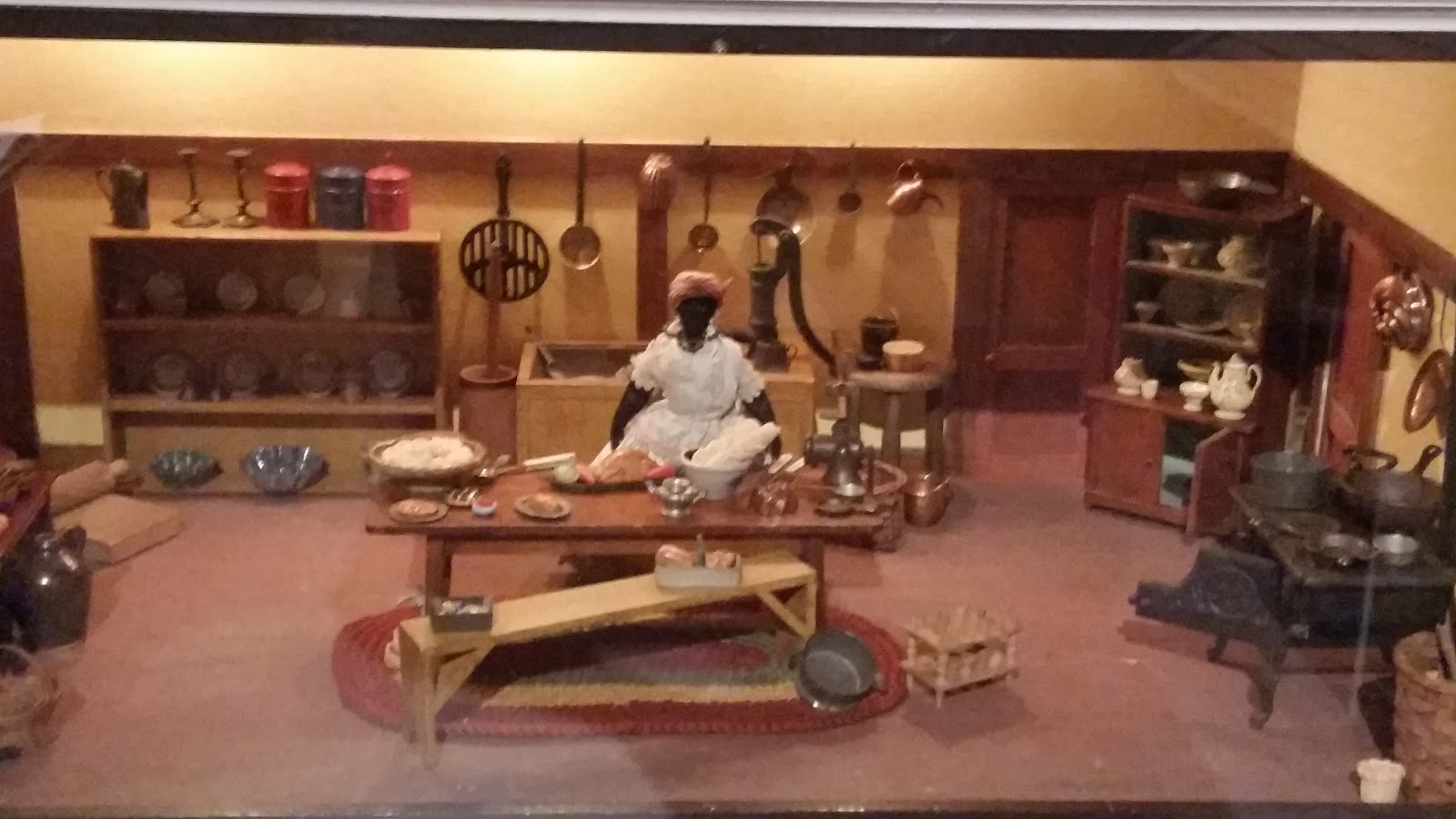
Every little girl dream

It looks real but...

Its part of a doll house

Burned on my birthday in 1854

Mental ill in Colonial days

Inlay done by hand

More beautiful inlay

That was our day.  Tomorrow I am going to try to return to Yorktown for some photos.

Hope all is well and thanks for stopping by.

Thursday, June 4, 2015

Virginia Beach And The Atlantic

We got up early this morning and headed down Highway 64 to Virginia Beach to see the Atlantic Ocean.  As long as we are here and this close why not see the difference between the two oceans.


There was too much fog to see much but we did see different sand.  More packed and a different color from our Pacific coast.  Most likely because of the awful storms we have been having the sand appeared moist and well packed.  Much easier to walk on and we actually thought Honey enjoyed walking here more than at the Pacific.

The water is a lighter coloration from the appearance but it is hard to tell with all the fog.  We could see much further than a hundred yards out.  The weather has been extremely uncooperative today on the way to and from the beach.  Luckily it stopped raining long enough for us to enjoy a short walk along a pathway that runs the length of hotel row.  During the trip down and back on the highways we experienced moments of not being able to see past the car in front of us and most of these folks don't slow down for incremental weather like I do.  Seventy miles an hour in rain like what fell this morning is ridiculous as the high number of accidents on our route would indicate.  There were several long backups created by accidents.  Water on the roadway causing people to hydroplane or being unable to see just a few feet when changing lanes.  It has continued to come down hard even after we got back to the trailer.  I posted a video of the rain outside the trailer on Facebook.

I am hoping to get up early enough to get to Yorktown tomorrow morning to see the Hermione arrive but if the weather is as it is right now, pictures may be a problem.  You can see looking at the picture of the ocean above, how hard it would be to see a ship sailing by.

Hope all is well and thanks for stopping by.

Wednesday, June 3, 2015

Historic Jamestowne, Were It All Began

Those who came to Jamestowne in May of 1607 did so as English subjects and established a colony and capitol, under a charter granted by James 1 to the Virginia Company of London.  This was a business adventure bent on exploiting the natural resources of the area.  The 104 colonists that arrived here faced the worst drought in eight centuries, Powhatan Indian tribes, poor leadership, and a very unhealthy atmosphere.  By the summer of 1607, colonists were dying from disease and starvation.  While life was never easy, over the decades to follow progress was made.  There are many stories besides the John Smith and Pocahontas stories.  Starvation led to cannibalism as the living tried to continue living.  It was desperate times until ships arrive with supplies but they bring more colonist's causing shortages and more starvation in the winter of 1609 - 1610.  Working together with the Powhatan Indians 60 of the 300 colonist's made it through to see Lord de la Warr arrive with more supplies.

Jamestowne grew from a commercial outpost of the verge of extinction to a colonist port of entry and administrative center.  At one time everything that arrived in America came through this port of entry.
The remnants of what is left are duplications of what is buried beneath them.  Archeologists decided to not to leave what was discovered of the foundations of the original colony above ground and instead buried them to protect them from erosion and built duplicates of what was discovered on top of the burial sites.  Archeologists are still working the site and there is an amazing amount of treasures found that are on display to see.

Foundations

Well

Row house foundation

Fences everywhere

Remains of one of the mansions

Same as above

More fences


Really old tree

The original find is buried beneath this

Archeologists at work

Large hole to uncover

Pocahontas

John Smith


The Church

Fort Wall reconstructed in the original holes

Barracks

We were British

Armor

Cross near the museum
We drove down to Yorktown to investigate a photo op location for the arrival of Hermione on Friday. For those who may not know, Layafette a French aristocrat and military officer worked to get the French government to commit troops and supplies to assist George Washington in the final days of the Revolutionary War.  On March 10, 1780 Layafette boarded the Hermione to travel to America with papers that he delivered to George Washington and representatives of his government stationed in the colonies that France would help the Revolutionary cause.  It is said that had we not gotten the help of the French we may very well still be British subjects.  A recreation of the Hermione set sale from France in April 2015 and she is expected to arrive in the York River just south of Yorktown this coming Friday morning.  I am hoping to take some pictures of the arrival.
Hope all is well and thanks for stopping by.

Monday, June 1, 2015

Technology Isn't Dead

After a morning trip to Colonial Willamsburg we came back to the trailer to try and stay as cool as possible consider the high humidity and temperatures in the mid-ninties.  Folks here say this current weather pattern is ten to fifteen degrees warmer than normal.  As I watched the folks who act out the colonial experience I couldn't help but feel for them.  Everyone standing around in shorts and T-shirts while they suffer dressed in full 19th century apparel.

When we got back to the trailer I dug out a couple of extension cords and we hooked up a fan and started to charge some of our electrical stuff.  Kindle readers are great but they use a lot of juice when you are using them and they take time to charge.  Books don't use any juice and you can read them uninterrupted.  Unfortunately we have Kindles not books.  We were able to charge most of the technology while watching TV plugged directly into the 20 amp service provided by the park in the electrical pedestal.  Last night we used the cords to run two small fans near the bed to help cool us down.  Not much cooling as the air was warm and stuffy but we managed to sleep better than the night before.

I spoke to the office here at the campground and they gave me the name of a mobile repair guy and I left a message on his phone yesterday.  I am hoping he can obtain the needed part and switch it out for me.  I am awaiting his call as I type out this short post.  Today will be laundry day for us as we wait for the call and possible visit from the repair guy.

The weather will continue to be hot and humid for the next couple of days, cooling somewhat towards the end of the week however there is 50 - 80% chance of rain and some thunder showers.  It may dampened our visits to Yorktown, Jamestown and back to Williamsburg.  I am sorry that there are no pictures from yesterdays adventure as I didn't take the camera  with me.

I hope all is well and thanks for dropping by.